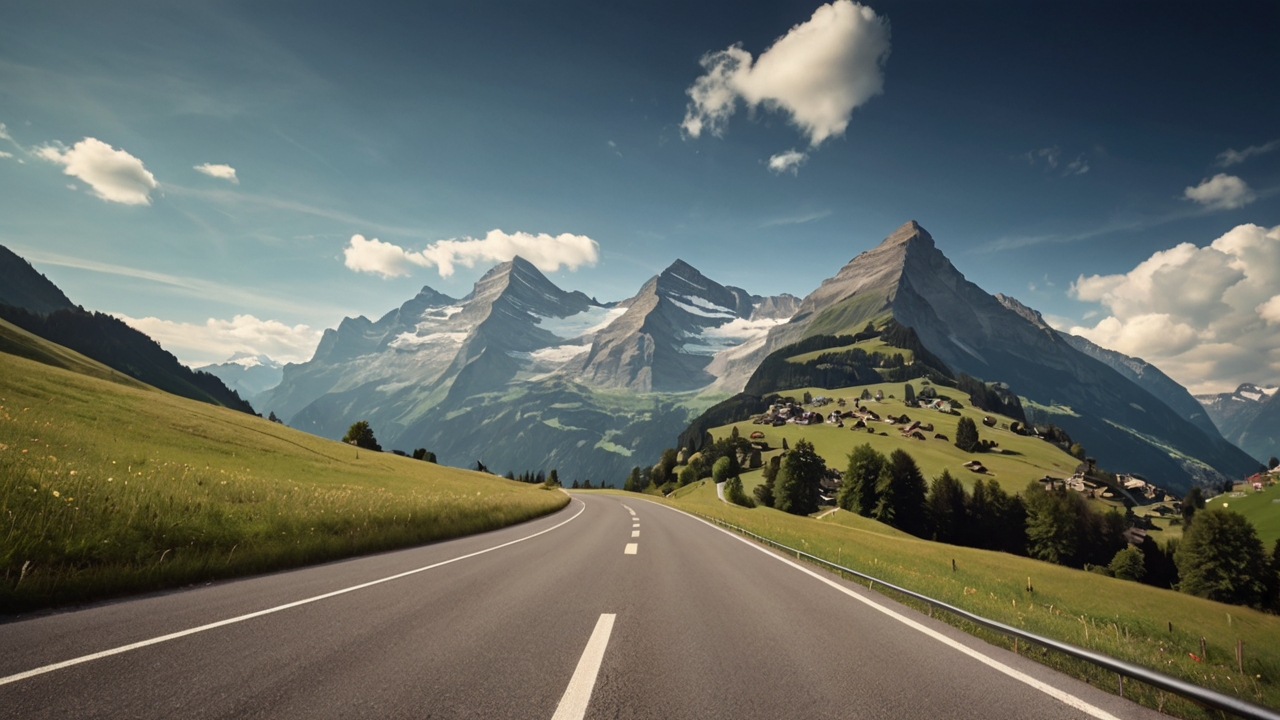
If you’re gearing up for a road trip through Switzerland to soak in its breathtaking lakes, towering mountains, and quaint villages, it’s essential to be well-prepared for driving in this picturesque country. Here’s what you need to know:
Driving in Switzerland means adhering to the right-hand side of the road, which may differ from what you’re accustomed to, especially if you’re from a left-hand driving country like the UK. Familiarize yourself with the country’s speed limits: 50 km/h in built-up areas, 80 km/h outside these zones, 100 km/h on semi-motorways, and 120 km/h on motorways.
For seamless travel on Swiss motorways and expressways, you’ll need a motorway vignette sticker affixed to your windshield. This sticker, available for 40 CHF, is mandatory and helps fund the country’s road infrastructure. Note that GPS apps like Google Maps can help avoid toll roads, but not those requiring a vignette.
During winter months, especially in mountainous regions, snow chains are compulsory when road signs indicate so. This precaution ensures safe driving on snowy or icy roads.
When driving through tunnels, regardless of their illumination, dipped headlights are required by law. It’s also advisable to use dipped headlights during daylight hours for increased visibility. Depending on your vehicle, you may need to adjust your headlight beams or use deflectors.
Switzerland imposes a strict alcohol limit of 0.05% for drivers. To ensure safety, it’s best to abstain from alcohol entirely when planning to drive.
While Switzerland does not have low-emission zones, certain mountain villages are car-free to preserve their pristine air quality. If your itinerary includes Geneva, be aware of the Stick’Air vignette requirement to access the city center, aimed at reducing vehicle emissions.
Prepare for your Swiss road adventure by understanding these driving essentials, ensuring both safety and compliance while enjoying the unparalleled beauty of Switzerland’s landscapes.